
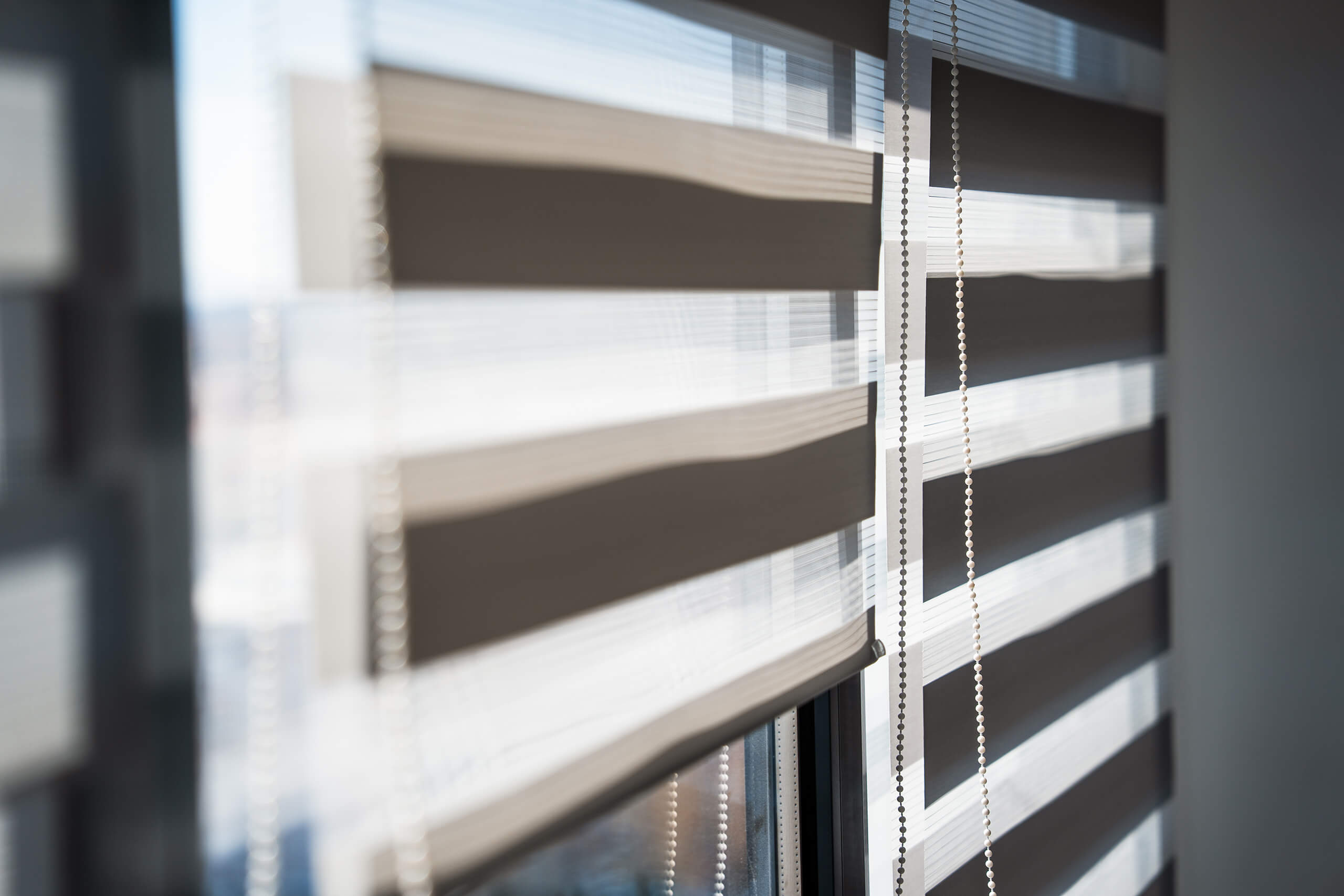
What are zebra blinds, also known as transitional shades? They are fabric window shades with alternating sheer and opaque horizontal bands. Moving two overlapping layers changes how much daylight enters and how much you can see through the window. They offer adjustable light control without tilting slats, although their fabric and fit determine how much privacy and darkness they provide
How Do Zebra Blinds Work?
The striped fabric forms two layers across the window. When sheer bands line up with sheer bands, daylight passes through and you have a filtered view outside. When the layers shift so the solid bands cover the sheer openings, the view becomes more obscured and the room gets dimmer. Positions between these settings let you fine-tune the light. The shade can also roll up to uncover the window. Unlike conventional blinds, there are no rigid slats to tilt.

Can People See Through Them at Night?
Transitional shades should not be treated as one-way privacy screens. With the sheer bands aligned, people may be able to see inside, especially after dark when your lights are on. Closing the bands improves privacy, but the result depends on the fabric’s opacity, how completely the bands overlap, and sightlines around the edges. A light-filtering fabric may still reveal shadows or silhouettes. For a street-facing bedroom or bathroom, ask to see the closed fabric against a light source and discuss nighttime privacy before ordering. Once installed, check the view from outside with the room lit. Our Blinds vs Shades guide explains why privacy depends on more than the product category.
Are Zebra Blinds Blackout Shades?
Not automatically. Closing the stripes is different from creating a blackout room. Room-darkening fabric can reduce incoming light, but light may still enter around the sides or through parts of the covering. A darker colour alone does not establish blackout performance. For daytime sleeping or a media room, compare a roller or cellular shade made with blackout fabric and discuss how the installation will manage edge gaps. Even blackout fabric does not guarantee complete darkness around the whole window.
What Are Transitional Shades Best For?
Transitional shades are worth considering for living rooms, dining rooms and home offices where you want to adjust daylight while keeping the window covered. Their horizontal stripes create a noticeable, contemporary pattern. If you prefer an uninterrupted fabric surface, a conventional roller shade may suit your room better. Look at samples in both the open and closed positions. Consider how the stripes relate to nearby windows, patterned furnishings and trim, rather than choosing from a small fabric swatch alone. For windows near cooking grease or splashing water, confirm that the selected material suits the location and cleaning demands.
Manual or Motorized Operation
Zebra blinds may use manual or motorized controls, depending on the product. Motorization can make a tall window or one behind furniture easier to manage, but available controls and power options vary. Budget Builders offers motorized blinds and shades on select styles, including transitional shades. Confirm eligibility for your chosen fabric and window size. Where children live or visit, Health Canada recommends coverings without long accessible cords. Always follow the supplied installation and safety instructions.
How to Clean Zebra Blinds
Treat the fabric gently. Regular light dusting with a soft duster is a sensible starting point; use a low-suction vacuum only if the manufacturer’s care instructions allow it. Avoid pulling or stretching the sheer sections. Do not assume the fabric can be scrubbed, soaked, steam-cleaned or treated with household stain remover. Ask for care instructions for the exact material before attempting spot cleaning. Zebra blinds may be less practical beside a busy cooking area if frequent damp wiping is essential.
When Roller or Cellular Shades Make More Sense
Choose a conventional roller shade when you want a simpler, unbroken appearance or a specific light-filtering or blackout fabric. It does not provide the same band-by-band adjustment: you generally change coverage by raising or lowering the fabric. Consider cellular shades when insulation is a priority. Their honeycomb construction traps air, adding an insulating layer at the window, as the U.S. Department of Energy explains. That makes them worth comparing for winter comfort in Regina. Transitional shades are primarily a choice for adjustable light and appearance, not a substitute for a purpose-designed insulating shade.
Explore Transitional Shades in Regina
Zebra blinds balance a distinctive striped look with flexible daylight control, but the right choice depends on your privacy, darkness and cleaning needs. Budget Builders offers varies styles of window shades, including transitional, roller and cellular options. Contact us to compare fabrics and operating styles for your windows.